Although the perspective on art students and their career prospects are changing, many students and professors still face discouragement and negativity in their pursuit of their passion and their careers.
Art students feel support from their professors and have gained a sense of community through studying art and design. Art professors encourage their students to take their art seriously and know how their skills can transfer to what the job market is in need of.
Some professors say finding a career is moving towards having a combination of certain skills. A few art students said specific inherent qualities and traits are needed to be present in the art world.
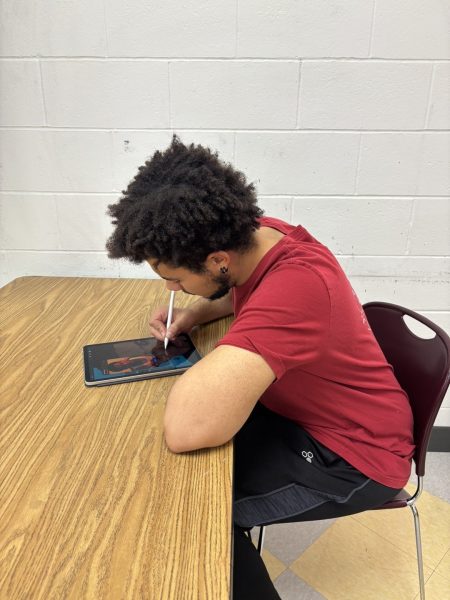
Isaiah Lowe, senior interactive media design and graphic design major, was initially studying computer science. Lowe decided to switch to an art major because it seemed more feasible and easier for him to get into the career he wants through studying art.
For his future career, Lowe wants to create video games. The switch to studying art has become more fun for him. He said it seemed easier to attain his future goals through art because being a business major was difficult and he experienced a lack of a certain kind of community compared to being an art major.
“I did feel like part of the community, but you’re kind of like your own lone wolf,” Lowe said.
Lowe said art majors face being overlooked and that their status isn’t as high as other colleges on campus. He views that the art department specifically has less funding than other programs and as a result receives a negative perspective from people on campus.
After graduation, studies show a low percentage of art majors work in art after graduation. According to ‘Spotlight on Contrasting Research on Art Graduates,’ “Just 10% of arts graduates are ‘working artists.’”
Many art graduates do not end up in a career where they create their own art for profit, especially immediately post-graduation.
Pacific University Oregon in “What Can You Do with an Art Degree” said “Many fine and performing arts majors become teachers, arts administrators, graphic designers, advertisers or even start their own creative businesses.”
Those working in the art field do often pursue multiple jobs in order to have more sources of income.
There are several opportunities and paths available for art graduates to consider. According to Central Michigan University, job openings include graphic designer, illustrator, animator, photographer, special effects artist, film and video editor, web designer, and art director.
The U.S. Bureau of Labor Statistics reports that “demand for web developers and digital designers has been expected to grow 8% from 2023 to 2033, faster than the average for all occupations.”
The pursuit of studying art is only increasing and gaining popularity in the job market.
In Hyperallergic, Rhea Nayyar said “University of California’s Berkeley Campus reported a 121% increase in first-years declaring majors within the school’s Division of Arts and Humanities between 2021 and 2022, while Arizona State University boasted over 4,000 students in the same department as of 2021.”
Recent art graduates also have an unemployment rate of around 8%, usually exceeding the average of all recent college graduates
The U.S. Bureau of Labor Statistics also states, “In May 2023, the median annual wage for this group (the art career field) was $51,660, higher than the overall median wage of $48,060.”
Although the societal perspective has been and is changing, many students still face discouragement towards studying art and pursuing it as a career.
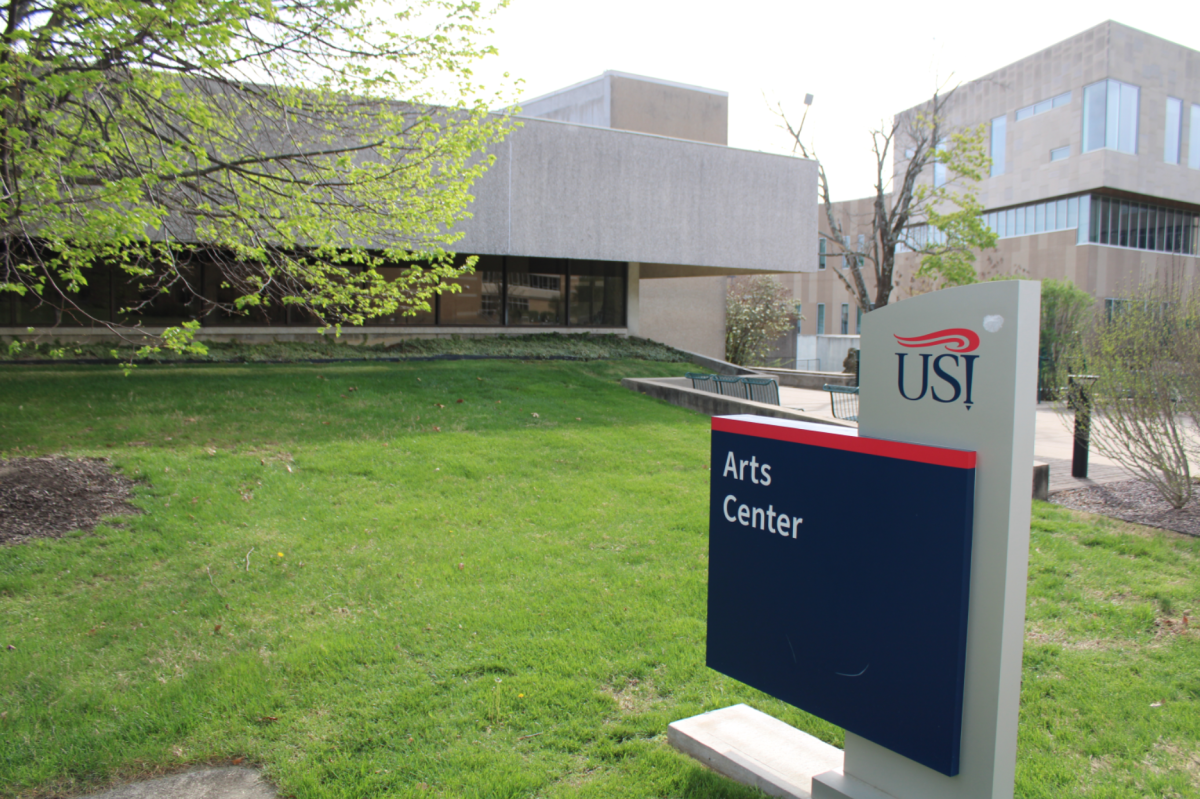
Morgan Ellis, senior graphic design major at USI, has always known that she wanted to pursue art as a career.
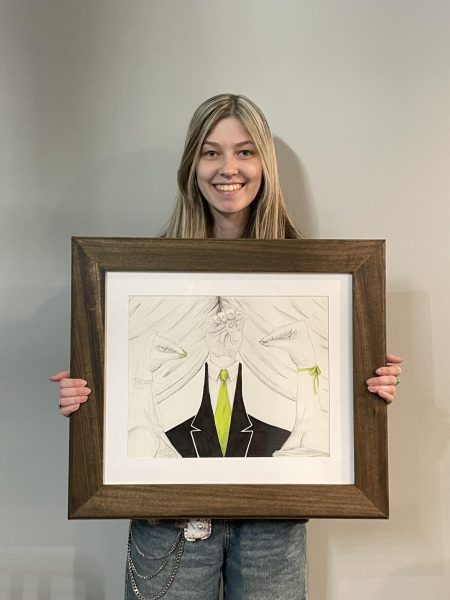
Ellis said she has faced some negativity when sharing her major, many people questioning the ability for her to get a job after graduation. She said people also ask her how she is actually going to make money. She believes that if you’re good at what you’re studying, you can make money off of being any kind of art major.
Lowe said the most criticism he has faced has been from himself. He faces moments of self-doubt, believing his art isn’t up to par as where it should be. In times of discouragement, Lowe said USI’s art department is encouraging and wants students to do the best they can.
“Even when I put myself down, everyone around me is always like ‘You’re on a good path and your art is getting better,’” Lowe said.
Greg Blair, assistant professor of art, wants to help art students towards their goals. He said talking to students about what they’re studying and what their future goals are is one of the most rewarding aspects of teaching.
He said he enjoys watching students be students and see them grow. Seeing what students create is why Blair comes to work every day.
“Specifically teaching art, I get to be around weird people and talk about weird things. It’s almost like we get to be in art school forever,” Blair said.
Compared to other disciplines, pursuing a career in art is not so clear cut.
Blair said we live in a time where everything is results driven, which can be challenging for art graduates when trying to get a job. He also said there has been an increase in recognition of the kind of skills art and design students have and the creativity they can bring.
“I think there’s an increase in value for those kinds of skills, and that’s kind of being recognized even in business sectors. I always tell our students, it’s kind of thrilling and terrifying at the same time, because when it is not so clear cut, it means there’s so many options available to you,” Blair said.
Recent studies support Blair’s claims. In ‘Cultivation of innovative thinking and career development in design education,’ Jinxiu and Huaqing Wang found the prioritization and popularity of digital and online content and access has increased the importance of design skills.
As the job market has begun relying heavily on digital media, design education is becoming more closely tied to career opportunities. Employers are specifically looking for skills that combine creativity and digital technology.
Blair said all art students go and find jobs, and none of them spend the rest of their lives unemployed.
“They’re all finding their little niche, their little area, where they can utilize the skills that they develop,” Blair said.
Hang Yuan, assistant professor in art and design, said current society is pushing students towards learning something useful. As an educator, Yuan feels pushed to consider interdisciplinary methods, not only art.
“We see lots of overlapping things from like the design [with] marketing, and also merging with select humanities, like psychology,” Yuan said.
Yuan wants others to know that art students don’t just do whatever they want.
“Art and design students hold really strong technical skills which easily transfer to other areas,” Yuan said. The authors also support Yuan’s claims.
Their research also found current employers are specifically looking for skills that combine creativity and interdisciplinary thinking.
Blair said he is not training his students to treat their art as a hobby, but rather as a job with real potential. He said he thinks art educators struggle to be taken seriously as a real field of study.
“I’ve even had colleagues in other departments comment to me things like, ‘Geez, that must be so easy to teach art, because you just say ‘Well, I like that or I don’t’, and that’s how you do your grading,” Blair said. “Art and design is something that can be very serious and can be very complicated and complex. I mean, you can get your PhD in those fields of study.”
Recent research in Enhancing design skills in art and design education, shows how an education in fields like art and design can result in essential 21st century workforce skills. Some of these key skills developed from design education include communication research, creative problem-solving and product creation.
Some art students and professors agree with the assumption that certain qualities or traits are needed to be in the art world, especially to be successful in an art career. Yuan said everyone who is part of the art and design department should be picky. He said the merge of design with being picky makes everything go smoothly and makes things easier.
Lowe said it’s vital to be creative and imaginative.
“If you’re not particularly creative, your art doesn’t really stand out and it doesn’t have as much personality,” Lowe said.
Ellis said to be in the field of art, you need to be at least a little weird.
“I feel like it also helps you think of a lot of different creative ideas, because you’re not really thinking the way that other people normally do,” Ellis said. “It also helps you be unique.”
Despite positives in and benefits to being an art major, students and professors still see room for improvement.
Lowe would like to have the opportunity of a wider range of classes that are specific to students’ desired professions. For his future career, Lowe would specifically like to see video game specific classes added to the art and design program.
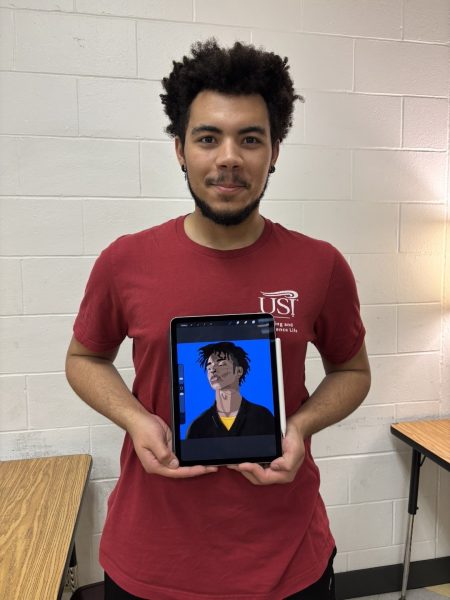
“I know other colleges have video game specific classes {…} for a wider range of people to hone in on what they want to do so they can get more specific skills to what they want,” Lowe said.
Yuan would like to merge one more major into the art and design department. He believes his students can benefit from roles in collaborations like the design for healthcare.
“I think that is kind of the new direction for future interdisciplinary collaboration. Definitely, I feel the market really needs students that come from both design and healthcare backgrounds,” Yuan said.
There can always be room for improvement. In the midst of an outlook change on studying art and art as a career, professors and students want to provide others with key insights into their work and their inclusivity.
Ellis believes most artists aren’t inherently artistically talented. Instead, she said artists put a lot of time into honing their skills. She believes talent shouldn’t be others’ or an artist’s focus anyways.
“Whenever you make art, you shouldn’t really think about how bad it looks at first. You should just be thinking about how much fun you have while making it, and not really the end product,” Ellis said.
Blair wants an outside perspective to know just how varied and diverse art and design is.
“We actually work with our students on a whole series of higher-level learning skills so that they have broad application beyond just art and design. Things like analyzing, observing, interpreting and critiquing, are higher level learning skills that can be honed and practiced and then applied to a wide variety of things that they’re going to encounter in their lives,” Blair said.
Lowe said pursuing art is not easy, but it is about growth and progress.
“It’s not about your skill in the moment. It’s about what your skill can get to after. If you care about the art that you make, it can be difficult and it can be a very time-consuming process, but it’s very rewarding,” Lowe said.