
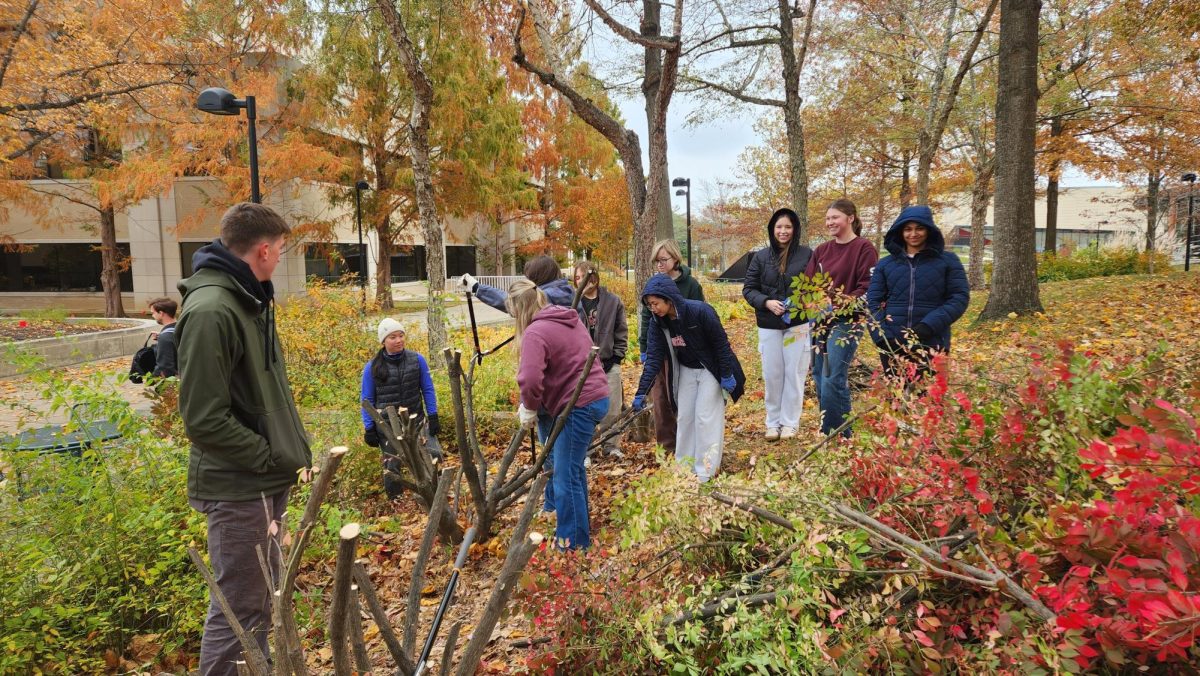
Anyone who enjoys spending time in the outdoors knows what a pain invasive species can be. Whether it be multiflora roses attempting to recreate sleeping beauty’s castle, or kudzu carpeting everything in sight, these plants have a tendency to take over ecosystems and stifle native plants and animals. In fact, many invasive species can be found on USI’s campus.
Bradford Pears, a species of ornamental tree, has been used on the landscaping in many of USI’s gardens. Students may have noticed that the Bradford Pears were removed from the parking lot just outside the Pott College building. Their removal was organized by Joseph Cirrincione, junior chemistry and pre-med major, in conjunction with USI faculty.
“All the animals, the birds, the pollinators, insects, all of them need these trees and bushes and whatnot, so the big reason for the Bradford Pear removal is that they’re invasive, and they aren’t very helpful to the pollinators that we have around,” Cirrincione said.
In America, a species is usually considered invasive if it was brought to America during or after European colonization, and has escaped the binds placed upon it by human cultivation. Tomatoes, though not native to southern Indiana, are not considered invasive because they do not tend to escape from gardens and propagate outside of them. Bradford Pears are considered invasive because their seeds tend to escape from gardens with the help of local wildlife, and they quickly displace local species once they have been introduced to an ecosystem.
“Most things, like your rose bushes and boxwoods, stay where you put them, but the invasive plant species tend to reproduce very quickly, and they tend to spread into our wild areas, and that’s really where they start having negative effects,” Edith Hardcastle, associate professor of biology, said.
Once invasive species have been introduced to an ecosystem they tend to choke out native plants and develop into a monoculture, a space where only one plant grows. This is a problem because the greater the amount of biodiversity in an ecosystem, the better an ecosystem is able to respond to disturbances. As climate change and pollution continue to affect ecosystems worldwide, invasive species are hindering the ability of many ecosystems to withstand the changes.
In addition to causing a decrease in species diversity, the introduction of invasive species into an environment can rob native wildlife of their food sources. Native animal species have not adapted to eating the fruits of invasive species, and the fruits of many invasive plant species have a lower nutritional content than the fruits of native plant species.
A number of pollinator species have evolved to feed exclusively on the nectar of a certain species of plant, and their populations decline when invasive species outcompete those plants. Additionally, the decrease in the nutritional content of the diet of pollinators who can consume the nectar of invasive species can cause their populations to decline because they are not getting the food that they need. Given that pollinators are a major food source for many animal species, the decline in their populations results in a decline in their predators’ populations as food grows scarce.
“[Invasive species] keep spreading and growing and basically taking up more space, but not really providing any benefit or [becoming] part of the food chain,” Hardcastle said.
While removing invasive species from the environment, and rectifying the effects that they have had on local ecosystems may seem daunting, it is doable.
In 2020 the Terrestrial Plant Rule banned the selling of forty-four of the worst invasive species in Indiana, including autumn olive and Japanese honeysuckle. The Vanderburgh County Cooperative Invasive Species Management Area (CISMA) organizes weed wrangles where volunteers remove invasive species throughout Evansville, and they offer training on how to effectively remove invasive species from your own garden or backyard. CISMA can be contacted on Facebook and by email at [email protected].
Local greenhouses, such as Goldfinch Nursery and Colonial Gardens, sell native plants for people to grow in their gardens. One does not need to have a large backyard or enormous garden to make a positive impact on local pollinator populations, just a few potted plants or a window garden can provide native pollinators with the food that invasive species have driven out of local ecosystems.
“If our pollinators all go away we’re going to lose food sources, and all that which we need to survive, so I think it’s just necessary to make sure … we’re doing our part to ensure they have the best chance of survival.” Cirrincione said.