
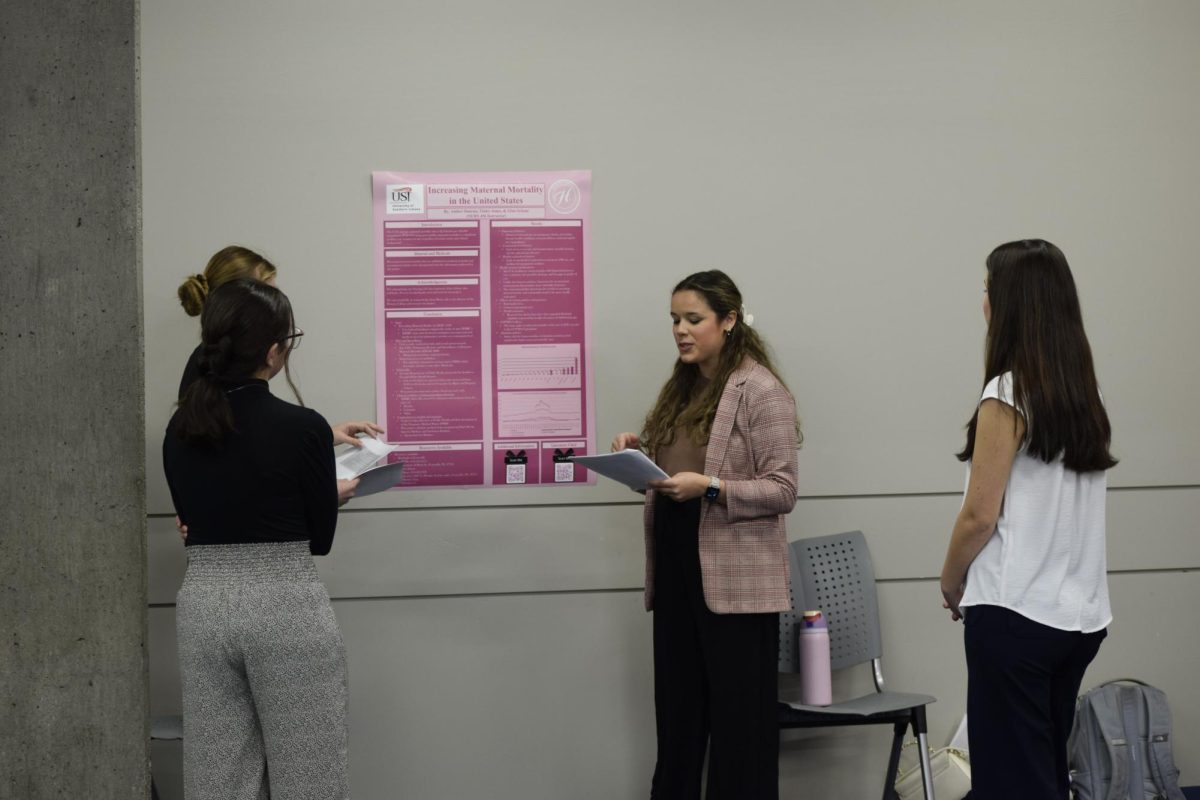
On Monday, Nov. 17, USI held an honors student symposium in University Center East. Students from the honors program presented their capstone projects, fulfilling one of the final requirements in order to graduate from USI as an honors student.
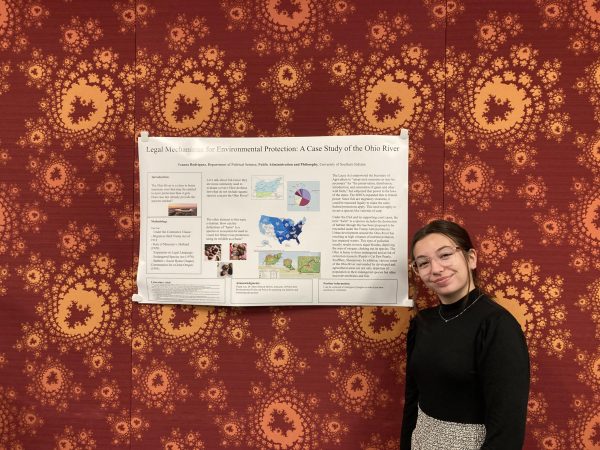
Ivanna Rodriguez presented her capstone project, a case study on the legal environmental protections of the Ohio River. In her project, she detailed the intricacies of environmental law pertaining to the Ohio River, specifically relating to the protection of fish and waterfowl.
“I’m wanting to go to law school for environmental law, so I wanted to do my capstone project on case law, and did practice, doing my first round of legal research,” Rodriguez said.

Christine Marx, senior biochemistry major, presented research on theories of consciousness. Her presentation focused on comparing the Penrose-Hameroff and Chomskyan models of consciousness, two different theories about what consciousness is and how it works.
Marx said, “There are thousands of theories of consciousness […] people can’t quite narrow it down because there’s so many explanations and so many things we don’t know.”
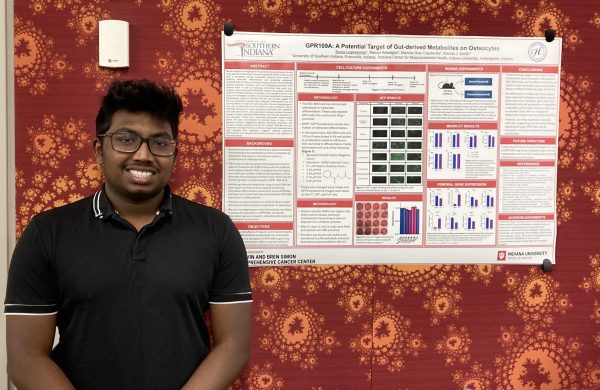
A presentation on the scientific study “GPR109A: A Potential Target of Gut-derived metabolites on osteocytes” was given by Surya Logeswaran, a sophomore biology major. Over the summer Logeswaran participated in the study, which focused on how Hippuric acid, typically found in fruits and vegetables, affects bone growth and maturation.
Logewaran said, “We’re looking at how [hippuric acid] helps promote osteoblast to osteocyte maturation. Basically, we’re looking at how hippuric acid can increase bone density.”
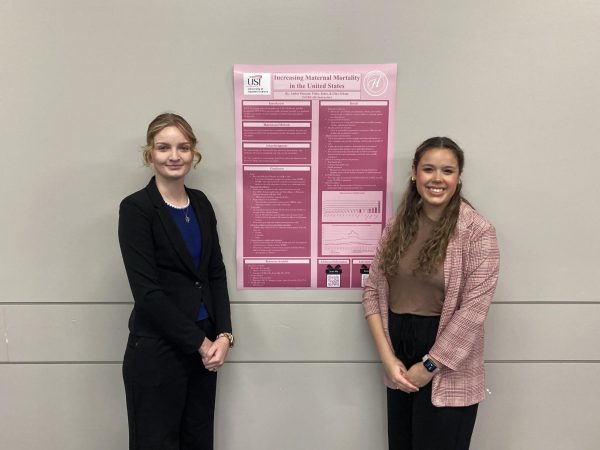
Amber Duncan and Tinley Jones, senior nursing majors, jointly presented their capstone project on maternal mortality in the United States. Their project details a large amount of data surrounding pregnancy and medical care of pregnant women that is not public knowledge, or may not be readily available to the women that need it.
Duncan and Jones wrote, “maternal mortality is such a broad topic and can include multiple contributions and unchangeable factors from the maternal side, but we still think that it is a prevalent problem that a lot of families face and an issue that needs to be discussed further.”
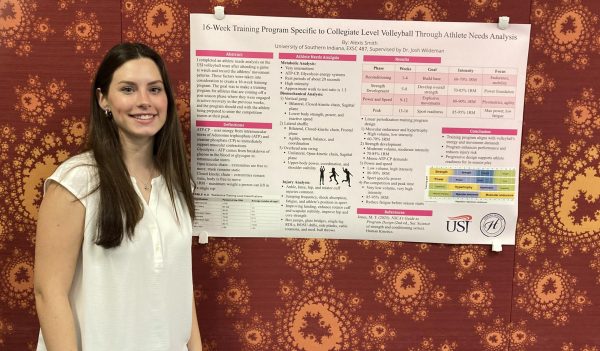
Alexis Smith presented her capstone project on a training program she had developed for collegiate level volleyball players. The training program would last sixteen weeks, and increase in intensity every four weeks.
Smith said, “We just took the metabolic needs, biomechanical needs and injury analysis, and then created a workout program that is designed to align with volleyball players’ energy movement demands, and then enhances their performance and reduces energy risk in an actual game.”