
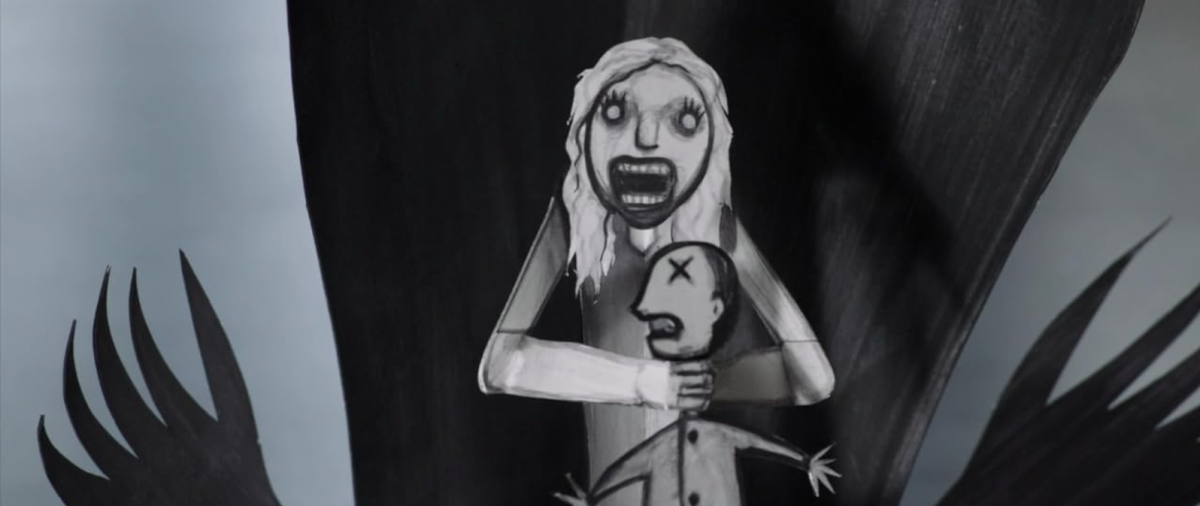
Had Netflix not accidentally turned the Babadook into a gay icon, I wonder if this film would be as well-known as it is today.
While there is a charm to it, and leading lady Essie Davis skillfully propels the movie forward, the plot is ultimately frustrating, and the film is unscary.
In classic horror movie style, there are several instances in which our characters could have made better choices. For example, Amelia could have told the police that someone had left a scary book in her house, dug through her trash, glued it back together, returned it to her with new threatening messages and made a menacing phone call. Which implies that someone broke into her house and watched her, because how else would they know that she had disposed of the book and was home? Would this have helped her situation? Maybe. The Babadook is a magical monster, so there’s no guarantee, but we’ll never know for sure.
Where the movie shines is its commentary on grief, mental health and motherhood.
“The Babadook” (2014) makes it abundantly clear that Amelie Vanek (Essie Davis) has not moved on from the traumatic loss of her husband. While the rest of the characters, like Amelie’s insufferable sister (Hayley McElhinney), think she should. I appreciate that Amelie allows herself to hold onto the love that she has for her husband and her memories of him. She tries to keep his memory alive for her son while still being protective of his belongings. She rejects the timeline that others try to impose on her grief and moves forward when she is ready to.
Spoilers Ahead
It’s no coincidence that the Babadook winds up locked away in the basement, where she kept her husband’s belongings, because I believe the Babadook is a representation of grief and mental illness. This is why I think the ending is beautiful and necessary.
In the words of Vision during “Wandavision,” “What is grief if not love persevering?”
Grief and illness are not pleasant emotions or experiences. No one of sound mind wants to be sick and miserable forever. I doubt anyone wants a Babadook living in their basement, literally or metaphorically. But wishing away these feelings, or in Amelie’s case, trying to block them out, doesn’t mean they aren’t there. It is only after Amelie cuts out the toxic influences in her life and starts leaning on her support system for help that she can live with the Babadook. She still has bad days, days when the Babadook causes her more trouble, but the monster’s existence doesn’t stop her life from being worthwhile.
If anything, this movie is more sad than scary. Although Samuel Vanek (Noah Wiseman) manages to be exceptionally irritating (just to be clear, he is the headache I am referring to in the title), all he ever wants is for his mom, his only family, to be okay. Despite all the horrible things he endures throughout this movie, he never stops loving her.
So, even though credits have rolled, and I have absolutely no intention of watching this movie or anything related to it again, I can’t help but think of its story.