

The Disability Resources office offers support for students with physical disabilities, mental health problems, learning impairments, etc. Their office runs programs to assist students across the campus.
College is the first time that many people start to take care of their own medical needs, and with that comes advocating for accommodations for any disabilities they may have. However, some students may not know how to do so.
Michelle Kirk, director of Disability Resources, wrote, “We encourage students to simply walk in and inquire. We are more than willing to discuss their concerns and assess whether they qualify for assistance. Consider us a resource.”
Students may wonder what exactly constitutes a disability. According to the Americans with Disabilities Act (ADA), a person has a disability if they have a physical or mental impairment that severely limits their ability to perform at least one major life activity. Anyone meeting the requirement can seek aid from Disability Resources.
Because the requirement is broad, Disability Resources caters to a large number of people on campus, with a variety of needs.
Kirk said, “The majority [of disabilities at USI] fall under the psychological category with depression, anxiety, PTSD, learning disabilities, dyslexia, those kinds of things, but we also have some students on the autism spectrum, individuals who may be blind or deaf or use a wheelchair.”
Disability Resources has an application form available in their office and on their website. Once the form has been filled out, they will meet with the applicant to form an accommodation plan. After the plan is formed, the office will then inform professors of the accommodations.
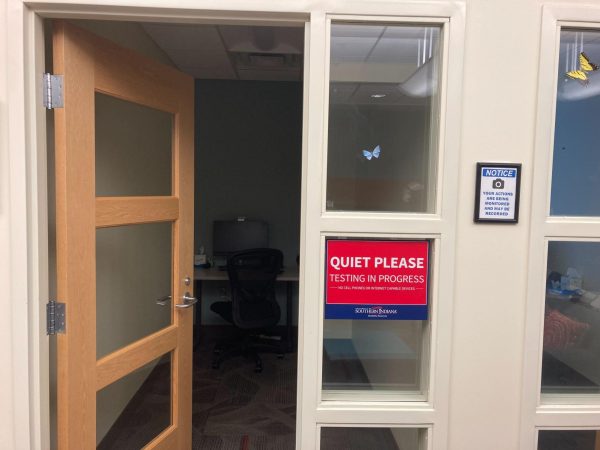
Kirk said, “Some of the more common accommodations are being able to take the exam in a quiet space [and] extended time to take a quiz or exam in our office.”
In addition to these accommodations, USI allows service animals throughout campus and emotional support animals in the dorms. Service animals can be brought onto campus without prior documentation, as per Indiana law, but that is not the case with emotional support animals.
Kirk said, “An emotional support animal is only just for that emotional support that has been approved by also providing documentation to our office.”